CardinaleWay Hyundai of El Monte - How Often Should Brakes Be Inspected in El Monte, CA?
Brake inspections help El Monte drivers stay confident during everyday commuting, school drop-offs, freeway merges, and quick errands around the San Gabriel Valley. If your vehicle spends time on I-10, I-605, Valley Boulevard, Garvey Avenue, or busy local streets near Peck Road, regular brake checks are a smart part of responsible vehicle care. At CardinaleWay Hyundai of El Monte, we make brake service straightforward with factory-trained technicians, state-of-the-art diagnostic equipment, and a service team focused on getting you back on the road with your vehicle performing as it should.
For most drivers, brakes should be inspected at least once a year or whenever a change in braking feel, sound, or performance appears. Many owners also choose to have brakes checked during routine maintenance visits, such as oil changes, tire rotations, or multi-point inspections. That approach works well because brake wear can happen gradually, and a professional inspection can catch early signs before a minor issue becomes a larger repair. Our service department can inspect brake pads, rotors, calipers, brake lines, hoses, brake fluid level, the master cylinder, wheel cylinders, and parking brake operation, and we can road test your Hyundai when appropriate.
Why Brake Inspections Matter for El Monte Driving
El Monte driving can be tough on brakes because local traffic often includes a mix of stop-and-go congestion, short trips, freeway speeds, and frequent lane changes. Brakes are used constantly in dense traffic near shopping centers, schools, and freeway ramps. Even careful drivers can experience faster brake pad wear if daily routes include repeated stopping, downhill stretches, or a lot of low-speed city driving. A brake inspection gives you a clearer picture of how much usable brake pad material remains, whether rotors are wearing evenly, and whether the hydraulic system is maintaining proper pressure.
Brake components work together as a system. Pads create friction against the rotors, calipers apply pressure, brake fluid transfers force, and related hardware helps everything move smoothly. When one part begins to wear or stick, the rest of the system may be affected. That is why a complete inspection is more useful than simply listening for squeaks. Some brake concerns make noise, but others show up as vibration, longer stopping distance, a soft pedal, pulling to one side, or a dashboard warning light.
Signs Your Vehicle May Need a Brake Inspection Soon
If you are not sure whether to schedule brake service, pay attention to how your vehicle behaves during normal driving. Changes are often easiest to notice during familiar routes, such as your regular commute through El Monte, a drive to Rosemead or Monterey Park, or a quick trip across town. Any new braking symptom is worth checking because brakes are central to your control behind the wheel.
- Squealing or squeaking: High-pitched brake noise may indicate worn pads, glazed surfaces, or hardware that needs attention.
- Grinding sounds: A rough grinding noise can point to advanced pad wear or contact that should be inspected promptly.
- Vibration or pulsation: Shaking through the steering wheel or brake pedal may be related to rotor condition or uneven brake surface contact.
- Soft or low brake pedal: A pedal that feels spongy, sinks too far, or responds inconsistently may involve brake fluid or hydraulic system concerns.
- Vehicle pulling while braking: Pulling to one side can be connected to uneven pad wear, caliper operation, tire issues, or alignment concerns.
- Longer stopping distance: If your vehicle needs more space to slow down, schedule a professional inspection as soon as possible.
- Brake warning light: A dashboard warning should be diagnosed with proper equipment so the cause can be identified accurately.
Even if your brakes feel normal, routine inspections can help you plan ahead. Our technicians can provide a clear assessment instead of leaving you guessing about pad thickness, rotor condition, or brake fluid health. That is especially helpful if your vehicle is used by multiple family members, travels often between El Monte and neighboring communities, or handles a heavy daily workload.
What We Check During a Brake Inspection
A thorough brake inspection looks at more than the visible brake pads. At CardinaleWay Hyundai of El Monte, our certified technicians use professional processes and equipment to evaluate the condition of key components. If your Hyundai needs replacement parts, we recommend Genuine OEM Hyundai parts designed for fit, performance, and long-lasting durability. We also service all makes and models, so our team can help with common brake concerns beyond Hyundai vehicles as well.
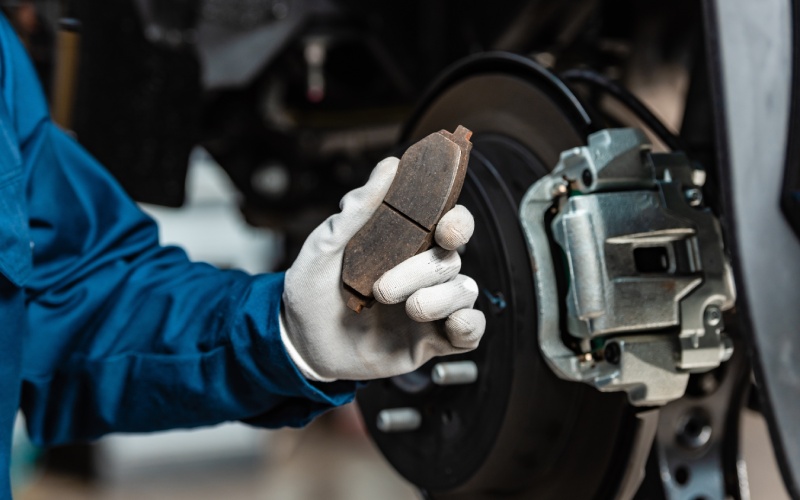
- Brake pads: We check remaining pad thickness and look for uneven wear patterns that may point to another issue.
- Rotors: We inspect rotor surfaces for scoring, grooves, heat spots, warping symptoms, or thickness concerns.
- Calipers: We look for proper operation, sticking, leaks, and hardware condition.
- Brake fluid: We check fluid level and condition because clean, properly maintained fluid supports consistent braking performance.
- Brake lines and hoses: We inspect for leaks, cracking, swelling, or visible damage.
- Master cylinder and wheel cylinders: We review hydraulic components for signs of wear or fluid loss.
- Parking brake: We check operation so the system functions as intended when you need it.
- Road test: When appropriate, we evaluate braking feel, sound, vibration, and overall performance on the road.
After the inspection, our service advisors can explain the findings in plain language. If your brakes are in good condition, you can continue driving with added peace of mind. If service is recommended, we can walk you through what needs attention now and what can be monitored for the future.
How Often Should Brake Fluid Be Checked?
Brake fluid deserves attention because it plays a major role in how your braking system responds. Over time, brake fluid can absorb moisture and become less effective. Vehicle maintenance schedules vary by model, mileage, and driving conditions, so your owner’s manual is the best starting point. However, checking brake fluid during regular service visits is a practical habit for El Monte drivers. Our team can review the fluid level and condition during a multi-point inspection and advise whether a brake fluid exchange should be considered.
Brake fluid concerns are not always obvious at first. A driver may not notice a gradual change in pedal feel until the system has already been affected. Having fluid inspected along with pads, rotors, and hydraulic components helps support more complete brake system care.
Why Choose CardinaleWay Hyundai of El Monte for Brake Service?
Our service department is built around convenience, accuracy, and customer care. We are located at 3462 Peck Rd, El Monte, CA 91731, making us a practical choice for drivers from El Monte, Rosemead, Monterey Park, Pasadena, West Covina, City of Industry, and nearby communities. We offer online scheduling, service specials, an on-site parts department, and a comfortable waiting area with amenities such as seating, free Wi-Fi, coffee, and snacks.
Our factory-trained technicians understand Hyundai vehicles and follow service practices designed to support factory standards. We also carry popular replacement parts on-site and can acquire additional Genuine OEM Hyundai parts through the Hyundai parts network. From brake pads and rotors to fluids, filters, batteries, tires, wiper blades, wheel alignments, HVAC service, and recommended maintenance, our team is here to help you keep your vehicle in dependable condition.
Frequently Asked Questions:
How often should I get my brakes inspected in El Monte, CA?
Most drivers should have brakes inspected at least once a year, and more often if driving includes heavy traffic, frequent short trips, or noticeable braking changes. Scheduling a brake check during routine maintenance is a simple way to stay informed about pad wear, rotor condition, and brake fluid health.
Can I wait until my brakes make noise before scheduling service?
Waiting for noise is not the best plan because some brake issues do not make obvious sounds right away. Squealing, grinding, vibration, a soft pedal, or longer stopping distance should be checked promptly, but routine inspections can identify wear before those symptoms appear.
Does CardinaleWay Hyundai of El Monte inspect more than brake pads?
Yes. Our brake inspections can include pads, rotors, calipers, brake lines, hoses, brake fluid level, the master cylinder, wheel cylinders, the parking brake, and a road test when appropriate. A system-wide inspection gives a more complete view of brake condition.
Do you use Genuine OEM Hyundai parts for Hyundai brake service?
Yes. When a Hyundai vehicle needs brake components replaced, we recommend Genuine OEM Hyundai parts for proper fit, dependable performance, and long-lasting durability. Our parts department supports our service team with popular Hyundai replacement parts and access to the Hyundai parts network.
How can I schedule brake service at CardinaleWay Hyundai of El Monte?
You can schedule service online, call our service department at 626-686-3912, or visit us at 3462 Peck Rd in El Monte. Our service hours are Monday through Friday from 7:00 AM to 6:00 PM and Saturday from 8:00 AM to 4:00 PM.
Brake care is easier when you have a trusted local service team nearby. If your vehicle is due for maintenance, if your brakes feel different, or if you simply want a professional inspection for peace of mind, CardinaleWay Hyundai of El Monte is ready to help. Schedule your next visit with our service department and let us help keep your vehicle prepared for daily driving around El Monte and beyond.