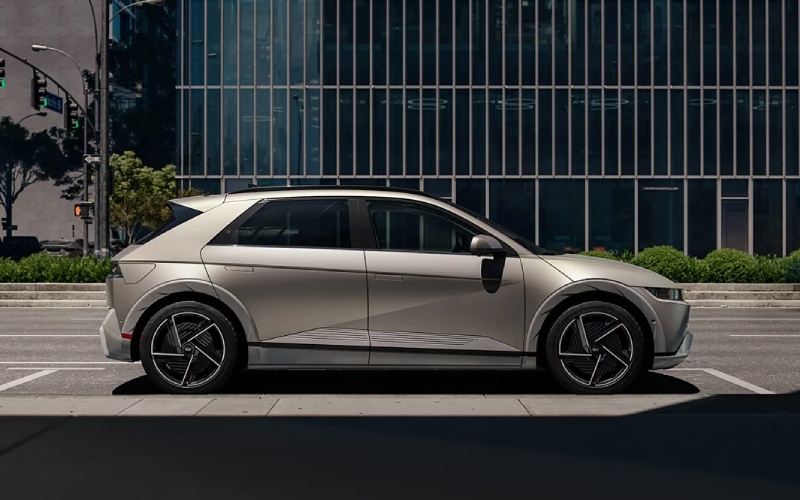
CardinaleWay Hyundai of El Monte - Is the 2026 Hyundai IONIQ 5 easier to fast charge than the 2026 Tesla Model Y around South El Monte, CA?
For many electric SUV shoppers, charging convenience is the question that comes before almost everything else. Range matters, performance matters, and interior technology matters, but an EV has to fit real life first. That is why the comparison between the 2026 Hyundai IONIQ 5 and the 2026 Tesla Model Y often centers on how quickly each vehicle can charge and how many charging options each one supports. The Tesla Model Y has a clear legacy advantage because Tesla built one of the most recognized fast-charging networks in the country. However, the IONIQ 5 has become a much stronger choice for drivers who want both speed and flexibility, especially with a Tesla Supercharger-compatible NACS port and an included CCS adapter for other major DC fast-charging networks.
For shoppers around South El Monte, charging is not just about road trips. It affects the daily rhythm of commuting, errands, work schedules, family obligations, and weekend plans. A driver may top off near the office, charge at home overnight, or use a DC fast charger before heading across Los Angeles County. The IONIQ 5 is built for that kind of mixed routine. Its 800V/350kW DC ultra-fast charging capability allows it to add range very quickly when connected to the right equipment, and Hyundai states that it can charge from 10-80% in as little as about 20 minutes under ideal conditions. That means less waiting and more confidence when the day does not leave room for long charging stops.
Short Answer: The IONIQ 5 Gives Drivers More Charging Flexibility
The Tesla Model Y is convenient when using Tesla’s own charging ecosystem, and Tesla lists up to 160 miles of added range in 15 minutes for the Model Y Standard under stated conditions. That is useful and impressive. The IONIQ 5, though, gives shoppers a different kind of advantage: it can use Tesla Superchargers through its NACS port and can also use compatible CCS chargers with the included adapter. In practical terms, that helps reduce the feeling of being tied to one type of public charger. For a driver moving between the San Gabriel Valley, downtown Los Angeles, the Inland Empire, or Orange County, that flexibility can make route planning feel easier.
At CardinaleWay Hyundai of El Monte, our conversations with EV shoppers often come back to one theme: people want electric driving to feel normal. The IONIQ 5 supports that goal by combining rapid charging, route planning tools, home charging compatibility, and connected services in a package that is easy to understand. Bluelink+ allows remote access from a compatible smartphone, including the ability to schedule or start and stop charging, lock or unlock doors, and activate climate control. For many owners, that kind of remote management makes the EV experience smoother from the first week of ownership.
How the Charging Hardware Compares
The biggest technical difference is the IONIQ 5’s 800V architecture. Many EVs, including the Model Y Standard shown in Tesla’s current published information, are based on lower-voltage charging systems. The IONIQ 5’s architecture is designed to accept very high charging power when connected to a compatible 350kW DC fast charger. Hyundai also notes that a rear-wheel-drive model with the larger battery can add up to 178 miles of range in about 15 minutes under ideal fast-charging conditions using a compatible charger and the CCS adapter. That is a meaningful advantage for drivers who value quick stops.
The Model Y still offers a streamlined charging experience at Tesla Superchargers, and Tesla’s network reputation is one reason many shoppers consider it. But the IONIQ 5’s NACS compatibility changes the comparison in a major way. Instead of viewing the Supercharger network as a Tesla-only strength, IONIQ 5 shoppers can now consider that network part of their charging plan while keeping access to other public networks. The included CCS adapter is especially important because many public DC fast chargers in Southern California still use CCS connectors. Having both pathways available can help drivers avoid detours or unnecessary waiting when a charger is busy.
- Charging speed: The IONIQ 5 offers 800V/350kW DC ultra-fast charging capability and can charge from 10-80% in as little as about 20 minutes under ideal conditions.
- Network access: The IONIQ 5 has a Tesla Supercharger-compatible NACS port plus an included CCS adapter for additional compatible networks.
- Home charging: With a 240V AC Level 2 home charger, the IONIQ 5 can go from 10-100% in about 7 hours and 20 minutes on applicable models.
- Trip planning: The EV Route Planner can help locate charging stations along a route and refresh navigation information while driving.
Why Charging Flexibility Matters Locally
Southern California driving is rarely limited to one route. A typical week may include work near the I-10 corridor, school drop-offs, restaurant stops in nearby communities, and longer drives across the region. Public chargers can vary by location, connector, charging speed, availability, and payment process. The IONIQ 5 helps address that reality by supporting multiple charging scenarios. Use a compatible Tesla Supercharger when that is the best option. Use a CCS network such as Electrify America or ChargePoint when that location works better. Charge at home with a Level 2 setup when overnight charging is the simplest solution.
This matters for apartment dwellers and homeowners alike. Someone without home charging may depend more on public infrastructure, so broader compatibility can be a real advantage. Someone with home charging may still appreciate fast DC charging for longer drives or busy weeks. The IONIQ 5 also supports Hyundai Home, which can help owners think through Level 2 charging, solar panels, and energy storage systems. While every home setup is different, the overall Hyundai ecosystem is designed to make charging feel less intimidating.
What About Range?
The Tesla Model Y Standard lists an EPA-estimated 321 miles of range, while the IONIQ 5 offers up to an EPA-estimated 318 miles depending on configuration. On paper, the Tesla has a slight edge in that specific figure. In daily use, however, range is only part of the ownership equation. Charging speed, charger compatibility, cabin comfort, driver-assistance features, and smartphone integration all affect how satisfying an EV feels over time. The IONIQ 5 comes remarkably close in maximum listed range while delivering clear wins in ultra-fast charging capability and device integration through standard wireless Apple CarPlay® and Android Auto™.
The IONIQ 5 also offers available Vehicle-to-Load 120V power outlets, which can supply power for compatible equipment, electronics, or appliances. That does not replace fast charging, but it adds another layer of usefulness to the vehicle’s battery system. Whether powering a laptop during a work break or supporting gear during a day away from home, V2L makes the IONIQ 5 feel like more than transportation. It becomes a practical electric tool for modern routines.
Which EV Is Easier to Live With?
Ease of ownership depends on more than plugging in. The IONIQ 5 makes a strong case because it combines advanced charging with a cabin that feels welcoming. The dual 12.3-inch displays provide a familiar driver information layout, while the standard touchscreen supports wireless Apple CarPlay® and Android Auto™. Many shoppers prefer having smartphone apps, maps, messages, and audio in a format already used every day. Tesla’s interface is powerful and clean, but it relies heavily on its central touchscreen and does not support Apple CarPlay® or Android Auto™.
Hyundai SmartSense® also contributes to day-to-day confidence. Standard and available features include Forward Collision-Avoidance Assist with Pedestrian Detection, Lane Following Assist, Lane Keeping Assist, Smart Cruise Control with Stop & Go, Rear Cross-Traffic Collision-Avoidance Assist, Highway Driving Assist 2 on select trims, Blind-Spot View Monitor on select trims, and Remote Smart Parking Assist 2 on select trims. For drivers serving Rosemead, Temple City, and South El Monte, those features can help make busy parking lots, lane changes, freeway commutes, and low-speed maneuvering feel more manageable.
- Choose the IONIQ 5 if: you want rapid charging, broad public charger compatibility, standard wireless smartphone projection, and a more conventional driver display.
- Choose the Model Y if: you prefer Tesla’s single-screen interface and want to stay primarily within the Tesla ecosystem.
- Compare both carefully if: your daily routine depends on specific charger locations, home charging access, or frequent regional driving.
Frequently Asked Questions:
Can the IONIQ 5 use Tesla Superchargers?
Yes. The current IONIQ 5 comes with a Tesla Supercharger-compatible NACS port, so drivers can access compatible Tesla Superchargers without needing a NACS adapter. It also includes a CCS adapter for use with compatible non-Tesla DC fast-charging networks.
Does the IONIQ 5 charge faster than the Model Y?
Under ideal conditions at a compatible 350kW DC fast charger, the IONIQ 5’s 800V architecture enables very fast charging, including 10-80% in as little as about 20 minutes. Tesla lists up to 160 miles added in 15 minutes for the Model Y Standard, so the best choice depends on charger type, battery condition, route, and driving needs.
Is home charging realistic with the IONIQ 5?
Yes. With a 240V AC Level 2 home charger, applicable IONIQ 5 models can charge from 10-100% in about 7 hours and 20 minutes. Many owners prefer home charging because it allows the vehicle to start the day with a useful amount of range.
Why might a shopper pick the IONIQ 5 over the Model Y?
The IONIQ 5 offers a strong mix of ultra-fast charging capability, NACS and CCS compatibility, standard wireless Apple CarPlay® and Android Auto™, an open flat-floor cabin, available Vehicle-to-Load functionality, and Hyundai warranty confidence. For many shoppers, that blend makes it a more complete everyday EV.
The bottom line is straightforward: the Model Y remains a capable electric SUV, but the IONIQ 5 is exceptionally well suited for drivers who want charging freedom rather than a single-network mindset. Its combination of 800V charging, NACS access, CCS compatibility, route planning support, and user-friendly cabin technology makes it easy to recommend. For shoppers comparing these two EVs around South El Monte, the IONIQ 5 deserves serious attention because it solves the charging question with speed, flexibility, and confidence.